Budget, Types of Budget, Objectives of Budget
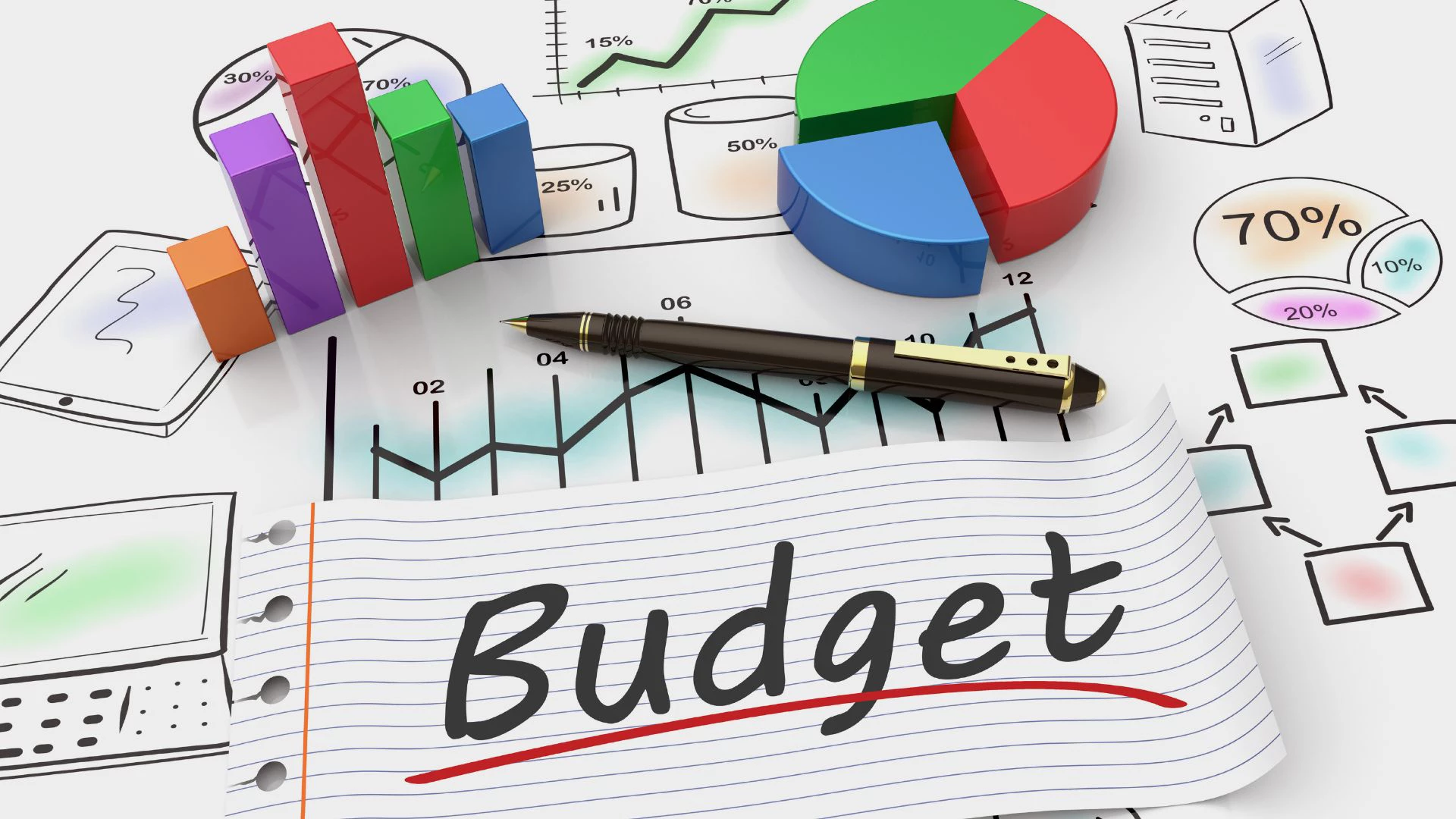
A budget is a detailed statement of the government's estimated income ( Revenue) and expenditure ( Spending) for specific period. It reflects the economic, social and political polices and plans of the country.
Generally, it is announced for one fiscal year.
It is formulated by the Executive (The government) and approved by the Legislature ( The parliament).
The badget is based on the principle of the Magna Carta: " No taxation without representation."
A budget is an eveluation record of the previous year's economic condition, a realistic depiction of the current fiscal year's financial status, and a projectiob of the economic plans for upcoming fiscal year. Therefore, it serves as a mirror of any country's public income and expenditure.
Budget is formulated in accordance with the constitution of Nepal, and funds from the consolidated Fund and other government funds can only be spent according to the annual budget, it holds significant constitutional importance.
It is also a major mechanism for the government to announce and implement its financial ( Fiscal) policies.
The budget system first started in britain in 1733 A.D. In the case of Nepal, the first budget was presented on Magh 21, 2008 B.S. during the tenure of the then prime Minister Matrika Prasad Koirala. it was introdeced by the then finance Minister Subarna Shamsher, with a total amount of 5 crore 25 lakh 29 thousand.
Types of Budget
Budget can be classiified into various types based on different criteria.
1. Based on the Relationship between income and expenditure:
i) Balanced Budget: Where income and expenditure are equal.
INCOME=EXPENDITURE
ii) Deficit Budget: Where expenditure is higher than income
INCOME ≤EXPENDITURE
iii) Surplus Budget: Where expenditure is lower than income.
INCOME≥EXPENDITURE
In the history of Nepal, a Sueplus Budget was presented only once, in the fiscal year 2033/034 B.S. All other bugets in Nepal's history have been Deficit Budgets.
2.Based on sectoral Expenditure
i) Recurrent or Current Budget : That includes expenses For salaries, allowances, office rent, and investments in goods or services that typically last less than one year.
ii) Capital Budget: This refers to expenditures on long term assets that last more than one year, such as building, land acquistion, furniture, and road constriction.
iii) Financial Management: This involves the repayment of the principal and interest on loans taken by the Government.
Financial Transfer: This refers to the budget or funds allocated and transferred to Provincial and Local Levels.
3) One the basis of Nature/ Objectives
i) Line- Item Budget: Focuses on specific items of expenditure like salaries and maintenance. It emphasize financial control.
ii) Performance Budget: Based on Functions, activities, and projects. It focuses on "What was accomplished" rather than just "What was spent".
iii) Program Budget: Allocates funds for specific programs designed to achieve long- term goals.
iv) Zero- Based Budget: Every budget cycle starts from "Zero baseline. Every expense must be justified as if it were a new program.
v) Gender Budget: Analyzes the impact of government revenue and expenditure on different genders, aiming for gender equality. IN THE Budget speech of the fiscal year 2064/065 B.S. Gender Responsive Budgeting was introduced for the first time in Nepal.
Part of 10 of the Constitution of Nepal, under the Federal Financial Procedures, provides a detailed explanation regarding this. In artical 119, The budget if defined as the " Estimates of Revenue and Expenditure" stating:
The Finance Minister of The Government of Nepal must present the annual estimates for each fiscal year at a joint sitting of both houses of the federal parliament, Including the following details:
1. Estimates of Revenue.
2. The required amount to be charged on the Federal Consolidated Fund.
3. The required amount to be expended under the Federal Federal Appropriation Act.
4. The amount allocated to each ministry in the previous fiscal year and a report on whether the targets of such expenditures were achieved.
The estimates of revenue and expenditure must be presented to the federal Parliament every year on the 15th day of the month of jestha.
Objectives of Budget:
1. Econimic Growth: To achieve high and sustainable economic growth.
2. Price stability: To control inflation and maintain financial stability.
3. Resoures Allocation: To distribute resources to priority sectors
4. Poverty Reduction: To alleviate poverty through social welfare and employment.
5. Income Redistribution: To reduce the gap between rich and poor via taxation.
6. Regional Balance: To ensure balanced development across all provinces and local levels.
7. Fiscal Discipline: To manage public debt and maintain transparency in government spending.
Other :
i)Increase GDP and per Capita income.
ii) Ensure Fiscal Transparency and public accountability.
iii) Create Employment opportunities
iv) Provide Foundation for monetary and fiscal policies.
v) Maintain Balance of payments
vi) Capital Formation .